Epictetus | The Manual | Enchiridion | 11-20
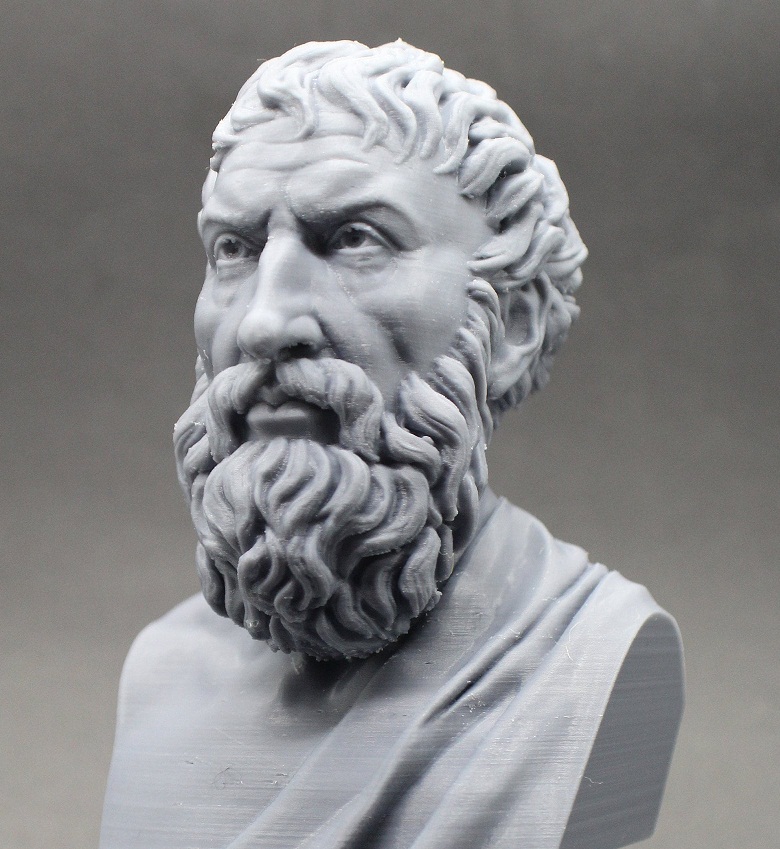
Epictetus
The Manual | Enchiridion | 12-20
Section 11
1 Never say about anything, "I have lost it," but only "I have given it back." Is your child dead? It has been given back. Is your wife dead? She has been given back. "I have had my farm taken away." Very well, this too has been given back. "Yet it was a rascal who took it away." But what concern is it of yours by whose instrumentality the Giver called for its return? So long as He gives it you, take care of it as of a thing that is not your own, as travellers treat their inn.
Section 12
1 If you wish to make progress, dismiss all reasoning of this sort: "If I neglect my affairs, I shall have nothing to live on." “If I do not punish my slave-boy he will turn out bad." For it is better to die of hunger, but in a state of freedom from grief and fear, than to live in plenty, but troubled in mind. And it is better for your slave boy to be bad than for you to be unhappy. Begin, therefore, with the little things.
2 Your paltry oil gets spilled, your miserable wine stolen; say to yourself, "This is the price paid for a calm spirit, this the price for peace of mind." Nothing is got without a price. And when you call your slave-boy, bear in mind that it is possible he may not heed you, and again, that even if he does heed, he may not do what you want done. But he is not in so happy a condition that your peace of mind depends upon him.
Section 13
1 If you wish to make progress, then be content to appear senseless and foolish in externals, do not make it your wish to give the appearance of knowing anything; and if some people think you to be an important personage, distrust yourself. For be assured that it is no easy matter to keep your moral purpose in a state of conformity with nature, and, at the same time, to keep externals; but the man who devotes his attention to one of these two things must inevitably neglect the other.
Section 14
1 If you make it your will that your children and your wife and your friends should live for ever, you are silly; for you are making it your will that things not under your control should be under your control, and that what is not your own should be your own. In the same way, too, if you make it your will that your slave-boy be free from faults, you are a fool; for you are making it your will that vice be not vice, but something else. If, however, it is your will not to fail in what you desire, this is in your power. Wherefore, exercise yourself in that which is in your power.
2 Each man's master is the person who has the authority over what the man wishes or does not wish, so as to secure it, or take it away. Whoever, therefore, wants to be free, let him neither wish for anything, nor avoid anything, that is under the control of others; or else he is necessarily a slave.
Section 15
1 Remember that you ought to behave in life as you would at a banquet. As something is being passed around it comes to you; stretch out your hand and take a portion of it politely. It passes on; do not detain it. Or it has not come to you yet; do not project your desire to meet it, but wait until it comes in front of you. So act toward children, so toward a wife, so toward office, so toward wealth; and then some day you will be worthy of the banquets of the gods. But if you do not take these things even when they are set before you, but despise them, then you will not only share the banquet of the gods, but share also their rule. For it was by so doing that Diogenes and Heraclitus, and men like them, were deservedly divine and deservedly so called.
Section 16
1 When you see someone weeping in sorrow, either because a child has gone on a journey, or because he has lost his property, beware that you be not carried away by the impression that the man is in the midst of external ills, but straightway keep before you this thought: "It is not what has happened that distresses this man (for it does not distress another), but his judgement about it." Do not, however, hesitate to sympathize with him so far as words go, and, if occasion offers, even to groan with him; but be careful not to groan also in the centre of your being.
Section 17
1 Remember that you are an actor in a play, the character of which is determined by the Playwright: if He wishes the play to be short, it is short; if long, it is long; if He wishes you to play the part of a beggar, remember to act even this role adroitly; and so if your role be that of a cripple, an official, or a layman. For this is your business, to play admirably the role assigned you; but the selection of that role is Another's.
Section 18
1 When a raven croaks inauspiciously, let not the external impression carry you away, but straightway draw a distinction in your own mind, and say, "None of these portents are for me, but either for my paltry body, or my paltry estate, or my paltry opinion, or my children, or my wife. But for me every portent is favourable, if I so wish; for whatever be the outcome, it is within any power to derive benefit from it."
Section 19
1 You can be invincible if you never enter a contest in which victory is not under your control. Beware lest, when you see some person preferred to you in honour, or possessing great power, or otherwise enjoying high repute, you are ever carried away by the external impression, and deem him happy. For if the true nature of the good is one of the things that are under our control, there is no place for either envy or jealousy; and you yourself will not wish to be a praetor, or a senator, or a consul, but a free man. Now there is but one way that leads to this, and that is to despise the things that are not under our control.
Section 20
1 Bear in mind that it is not the man who reviles or strikes you that insults you, but it is your judgment that these men are insulting you. Therefore, when someone irritates you, be assured that it is your own opinion which has irritated you. And so make it your first endeavour not to be carried away by the external impression; for if once you gain time and delay, you will more easily become master of yourself.